Kakobuy Shoe Wardrobe Gap Audit
Kakobuy Shoe Wardrobe Gap Audit
Many people look at style first when screening shoes, then find reasons to buy, which often results in three pairs of similar shoes in the closet while the truly missing rain shoes, commuter shoes, or walking shoes are never added. The task of this guide is to build a reviewable shoe wardrobe gap archive and filter out candidates worth further verification from those found on kakobuyspreadsheetshoes.com.
After reading, you should be able to divide candidates into three categories: priority verification, hold, and exclude. This article is not for people who have already determined a specific model and only need logistics quotes, nor is it for judging brand authenticity or guaranteeing a particular pair fits.
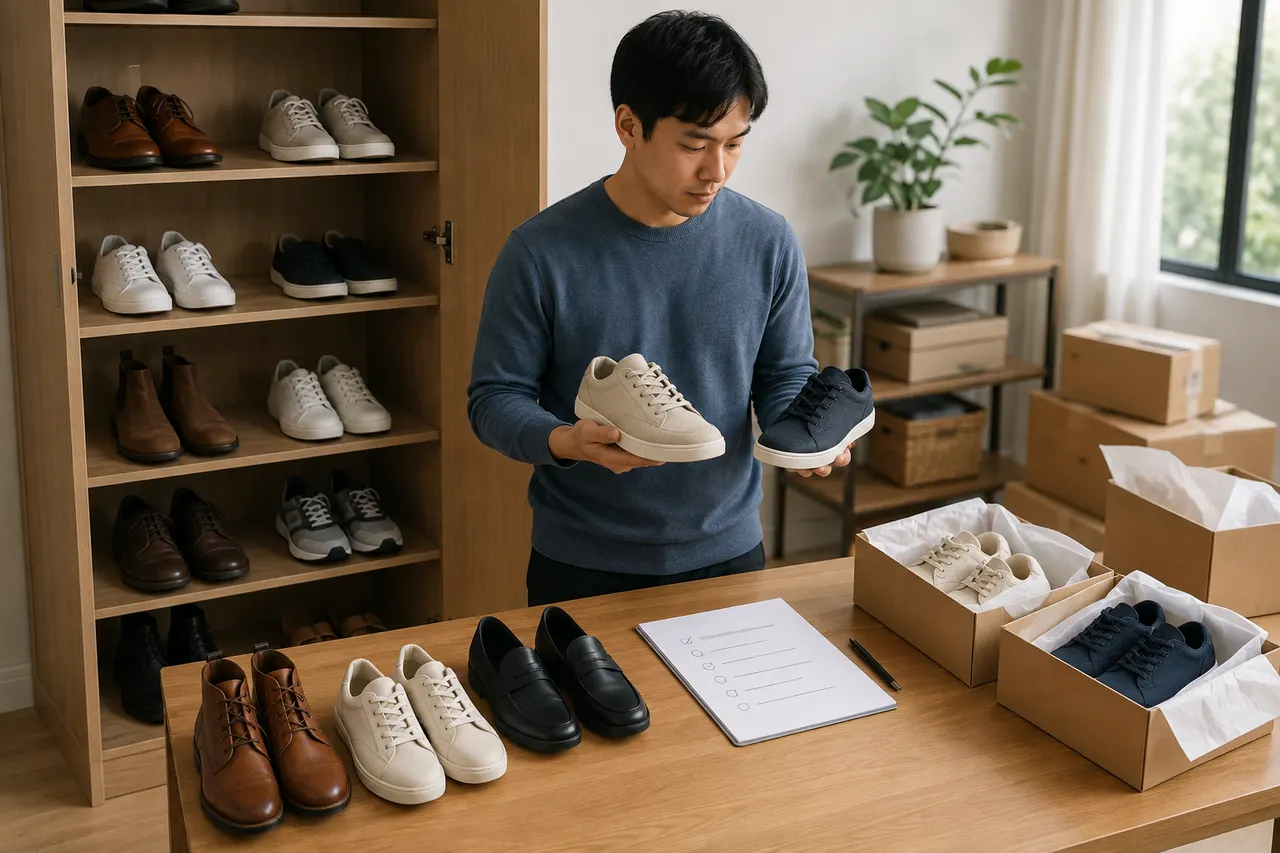
First define the shoe scenarios and gaps to address
Write scenarios first, not shoe names. An effective gap should at least include usage frequency, weather, road surface, continuous wearing time, dress code requirements, and why current shoes fail.
For example, "missing a pair of black shoes" is too vague; "commuting three days a week, needing dark shoes that can handle light rain, about an hour of walking, and suitable for office attire" can be used for screening.
It is recommended to answer four questions first:
Which scenario currently has no suitable shoes?
What specifically is insufficient about existing shoes in this scenario?
Which conditions must be met, and which are just preferences?
If not purchased within three months, what practical inconvenience would occur?
If there is no clear answer to the last question, this gap may be just a purchase desire, not a usage need. 👟
Inventory existing shoes by purpose, season, and road surface
List all shoes, including those in use, repairable, to be eliminated, and long idle. Do not just count quantity; the same pair can cover multiple scenarios, but indicate under what conditions they fail.
Dimension | Suggested Recording Content | Judgment Focus |
|---|---|---|
Purpose | Commuting, sports, travel, formal, casual | Whether existing shoes can stably complete tasks |
Season | Hot, cold, rainy, year-round | Conflicts among breathability, warmth, and water-repellent needs |
Road Surface | Indoor, asphalt, wet slippery, gravel | Sole tread, support, and wear resistance needs |
Condition | Normal, needs repair, soon to be eliminated, idle | Whether repair can replace new purchase |
Wearing Limitations | Rubbing feet, pinching toes, loose heel, hard to clean | What problems new candidates must solve |
First try to reassign scenarios with existing shoes. Problems solvable by cleaning, changing insoles, or repairing should not automatically become new purchase needs.
Establish fields for archiving candidate shoes on kakobuy
kakobuyspreadsheetshoes.com can serve as an entry point for discovering candidate shoes, but candidate records cannot just save images or names. Kakobuy's role in this process is to assist in purchasing products from Chinese e-commerce platforms and provide appearance information verification and subsequent international shipping services after goods enter the warehouse. Therefore, discovery page information, seller product information, warehouse QC information, and logistics information should be recorded separately and cannot replace each other.
Each candidate should have at least the following fields:
Candidate ID and record date
Product name, source page, and seller product page status
Corresponding shoe wardrobe gap
Color, marked size, shoe type, and visible material description
Product price and domestic shipping in mainland China
Visible size chart and its measurement unit
Estimated usage frequency
Unverified information
Reason for elimination or next verification action
When a link is broken, no clear product name appears after redirect, or page information is insufficient to identify a specific shoe, it can only be marked as "evidence pending" and cannot enter purchase priority. 🔎
Use substitution relationships to exclude functionally duplicate candidates
Do not compare "which looks better", but "which fills an uncovered scenario". Find an existing substitute shoe for each candidate, then judge item by item:
Do they serve the same purpose and season?
Does the candidate solve the clear defects of the existing shoe?
Does the candidate add new capability, or only color and appearance change?
Can usage frequency support it taking closet space and shipping budget?
If not purchased, can existing shoes still complete most tasks?
If the candidate has high functional overlap with existing shoes and does not solve size, weather, road surface, or dress code limitations, mark it as "exclude". If two candidates fill the same gap, keep only the one with more complete evidence, wider applicable scenarios, or easier total cost control for further verification.
Record size, shoe type, and product information evidence
Shoe size cannot just record "what size I usually wear". At least save the brand size of commonly worn shoes, foot length, foot width, sock thickness, measurement date, and whether the candidate product size chart uses foot length, insole length, or inner shoe length.
When the product page does not specify the measurement standard, do not convert to a determined size on your own. Narrow shoe type, toe room, upper structure, and closure method should also be listed as independent fields. Images can only support visible features, not prove softness, durability, smell, true material, or long-term comfort.
It is recommended to divide evidence into three levels:
Confirmed: page text, order specifications, or clear QC images directly support it
Pending: requires seller reply, supplementary measurements, or warehouse photos
Unconfirmable: cannot be reliably judged based on existing remote materials alone
When conflicts arise, keep original records and verification dates, and do not overwrite facts with speculation. 📏
Check QC images and specification information gaps
According to the platform information provided for this writing, Kakobuy's routine inspection focuses on appearance information such as style, quantity, color, size, and model, and conducts prohibited items screening. This does not equal try-on, professional material identification, or durability testing.
After shoes enter the warehouse, check QC information around the initially defined gap:
Are left and right shoes consistent in style, color, and marked size
Any obvious visible abnormalities in upper, toe, heel, and sole
Are accessories, shoelaces, and visible packaging contents complete
Whether photo angles can clearly show size labels and key structures
Whether visible details promised on the product page can be matched
If key positions are not photographed, first record "insufficient QC evidence", then decide whether to request supplementary photos or measurements. Do not infer proper size or material quality just because overall photos look normal. 📷
Mark boundaries for fees, shipping, and return/exchange information
Shoe priority must consider landed cost, not just product price. According to the platform information provided this time, fees may include product price, domestic shipping in mainland China, international shipping, and customs-related fees; international shipping is affected by weight, route, and destination. Shoe boxes may also increase chargeable weight or volume, but whether to remove boxes should consider shipping protection, return/exchange restrictions, and collection needs.
This information also shows that the return/exchange processing window for regular products is 120 hours after warehousing, and may not apply to customized, restricted, and items where the warehouse has been requested to remove packaging, tags, or accessories. Free storage period, route rules, actual fees, and return/exchange eligibility are facts that may change.
Information check date: September 3, 2026. What is recorded here is the platform information boundary received for this writing, and does not constitute a real-time promise at payment. Before submitting orders, applying for return/exchange, or packing for shipping, reconfirm fees, time limits, route restrictions, and destination country regulations on Kakobuy's current pages.
Truthfully declare products and value, and prepare documents and pay possible taxes and fees according to destination country requirements. Do not evade inspection through undervaluation, mislabeling, or unpacking.
Complete purchase priority list and execute next steps
Finally, keep only candidates that correspond to specific gaps and score them in the following order:
Scenario necessity: does it solve a high-frequency and real inconvenience
Functional increment: cannot be replaced by existing shoes
Evidence completeness: size, shoe type, specifications, and page status verifiable
Cost controllability: product, domestic shipping, international shipping, and potential taxes acceptable
After-sales risk: able to complete QC inspection and processing within applicable window
"Priority verification" does not mean immediate purchase. It indicates the shoe is worth entering the next step, including confirming product page validity, checking size standards, estimating shipping plans, and setting up QC inspection checklist after warehousing. "Hold" applies to candidates with real needs but incomplete information; "Exclude" should keep reasons to prevent being attracted by the same image again in the future. ✅
The main savings from adopting this archive come from reducing functionally duplicate purchases and discovering size and information gaps before payment or international shipping. The added cost is the time needed for organizing materials, waiting for supplementary evidence, and checking QC item by item. It suits people with many shoes, sensitive to cross-border shipping costs, or frequently hesitating among similar styles; if it's just an urgent replacement of a basic shoe with clear specifications, a full archive may be too heavy, and you can keep only four core records: scenario, size evidence, total cost, and QC checklist.
Agent platform shopping FAQ
1. How can I browse quality inspection images of products on kakobuy?
When viewing QC photos provided by kakobuy, pay attention to specific features of the purchased item. For example, for shoes, focus on stitching at the toe, heel, and tongue, overall structure, and tongue thickness to judge whether it is a high-quality shoe. For clothing, check details such as collar labels, embroidery of brand logos, fabric texture, and flatness of collars and cuffs.
2. What do QC photos mean in kakobuy?
Kakobuy has a dedicated quality management team. When your goods arrive at kakobuy's warehouse, staff will conduct quality inspection and take QC photos. Usually three photos are taken per item, and they check whether color, size, specification, and quantity match the order, and also whether there are quality issues. However, for electronic products, only appearance is checked. If defects or size/color errors are found, the team will immediately apply for return to the seller to ensure you receive good quality products.
3. How do I find products I want to buy on kakobuy?
You can search using single keywords on kakobuy, or browse category pages directly; products are also displayed by brand. Longer search terms usually return fewer results but more precise ones. For example, you can search "Air Force 1 white", "sneakers", or just "Air Force 1".
Browse our latest products and find your next favorite item.